
HOME / NEW DOORS
A new door that suits the block.
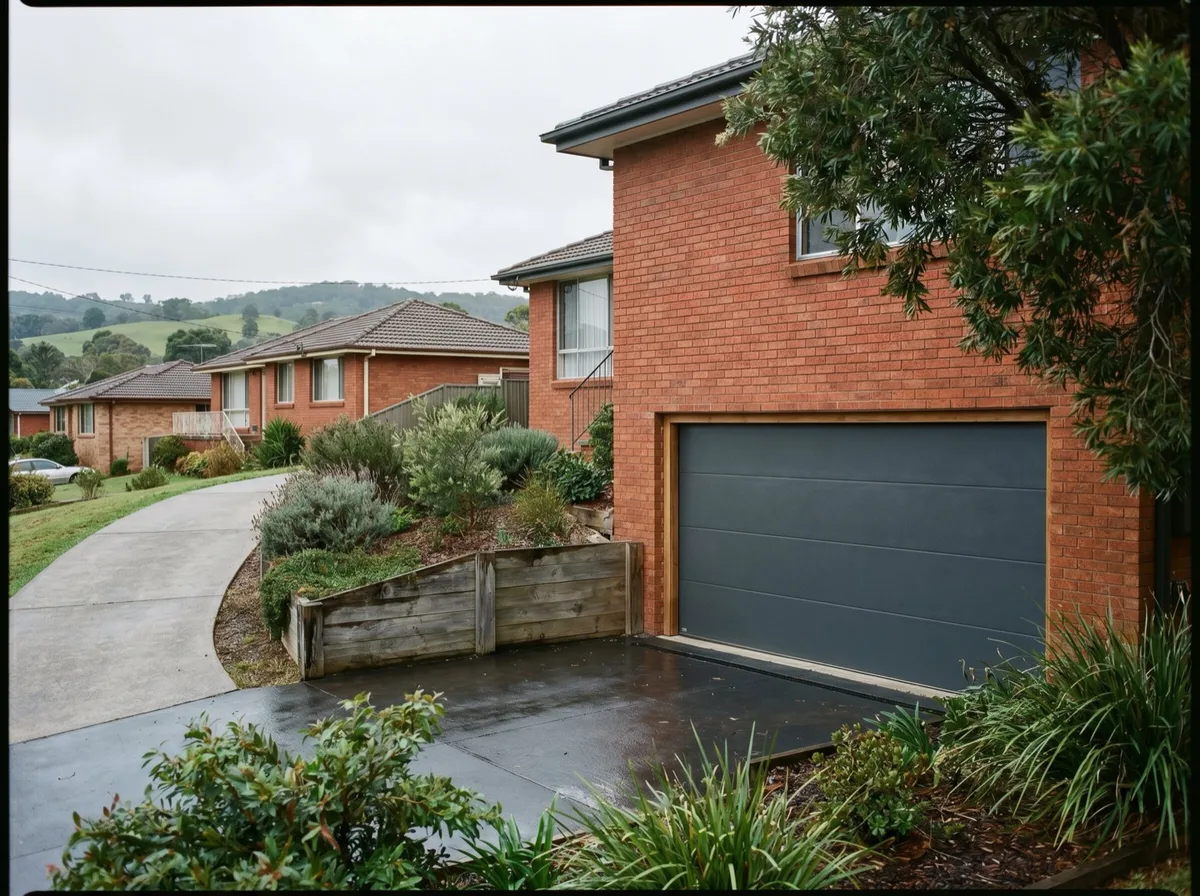
Charlestown's blocks fall away, its garages hide under houses, and a lot of its original tilt doors are quietly done. Choosing the replacement is a geometry question before it's a style question, so we start with a tape measure at your place, free, and finish with a written quote.
Why the measure comes first
Headroom decides more than taste does.
Three numbers rule a garage door: headroom (the space above the opening), sideroom (beside it) and backroom (the depth behind it). On a flat block with a generous garage, almost anything fits. Under a Charlestown split-level, headroom is often the whole conversation.
A sectional door typically wants around 300 to 400 millimetres above the opening for its tracks and curve. A roller door can live with roughly 200 to 250, which is why it's the old friend of low under-house garages. An original tilt door needs less above but swings out into the driveway as it opens, which is a genuine problem when your driveway is short, steep, and has a car on it.
SECTIONAL ~300-400 mm HEADROOM · ROLLER ~200-250 mm · TILT SWINGS OUT
The full comparison, including insulation, noise and repairability, lives in the door-types guide.
The tilt-door generation
They owe nobody anything.
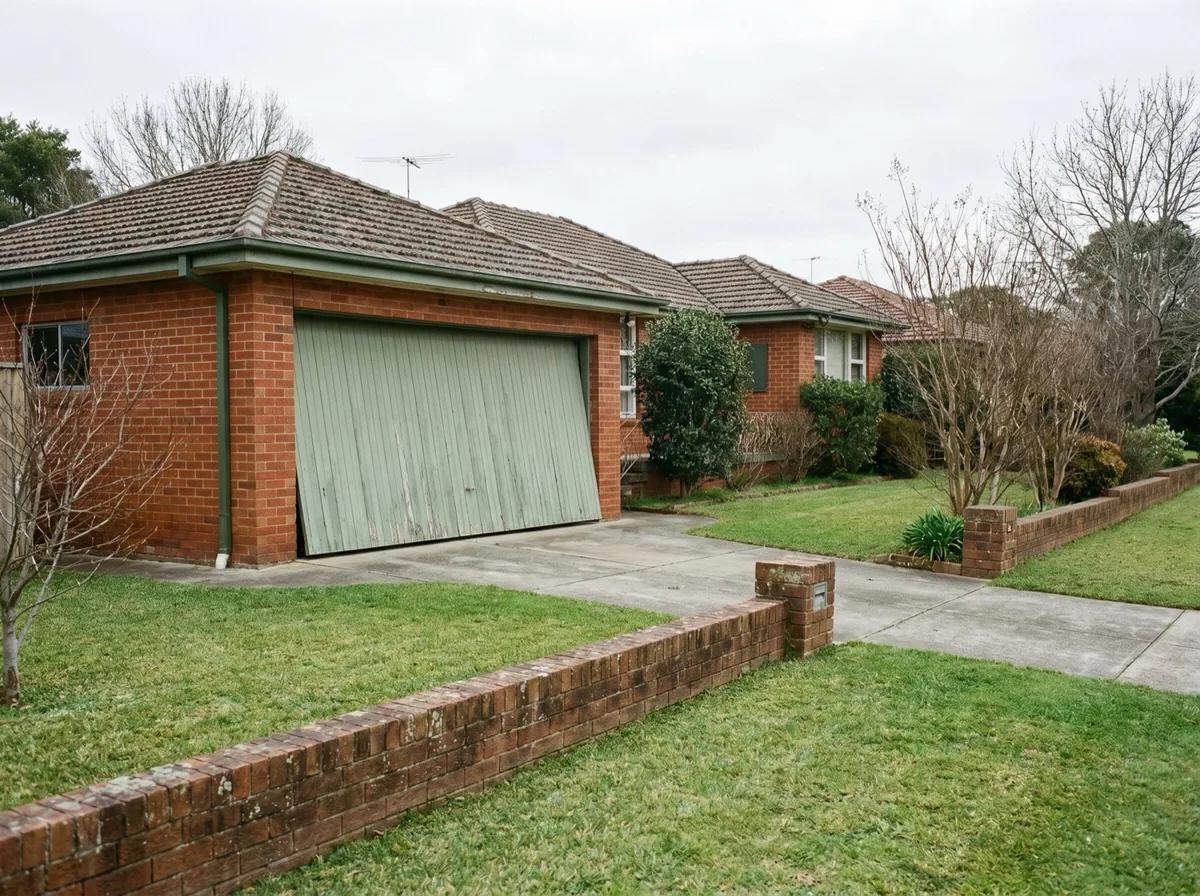
A big share of this suburb went up in the fifties, sixties and seventies, and plenty of those garages still run their first one-piece tilt door. Decades of honest service later, the hinges are tired, the springs are past their best, and parts are a hunt.
Repairing one can still be the right call, and we'll say so when it is. But when a tilt door is finished, replacing like-for-like is rarely the smart move on a sloped block. The replacement is your one chance to fix the geometry: a door that doesn't swing into the driveway, seals properly against a floor that isn't quite level, and takes an opener without drama.
Insulated panels are worth a thought too. An under-house garage shares its ceiling with your floor, and a foam-cored panel takes the edge off both summer and winter up there on the ridge.
How the quote works
Measured, written, no surprises.
We fit the common Australian door and opener brands and we'll talk you through the options by name, but you won't see badge-collecting on this site. What matters is whether the door suits your opening.